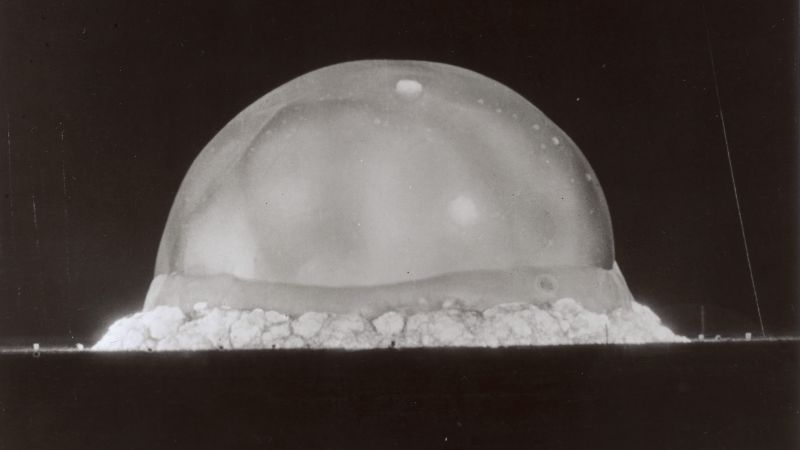
Good News: World Records Longest Ever Lull in Nuclear Tests. Bad News: It’s on Shaky Ground.
The world has been experiencing a historic lull in nuclear testing, with the longest period ever recorded without a test. This is undoubtedly good news, as it suggests that nations are taking a step back from the brink of nuclear war. However, as we’ll explore in this post, this lull is on shaky ground, and there are several reasons to be concerned about the future of nuclear disarmament.
Background: The History of Nuclear Testing
Nuclear testing has been a major concern for decades, with the first test taking place in 1945. Since then, over 2,000 tests have been conducted, with the majority taking place during the Cold War era. The Comprehensive Nuclear-Test-Ban Treaty (CTBT) was signed in 1996, aiming to ban all nuclear tests. However, while the treaty has been signed by many countries, it has not been ratified by all, and some nations continue to conduct tests.
One notable example is North Korea, which has conducted several tests in recent years, including a hydrogen bomb test in 2017. This test sparked widespread condemnation and raised concerns about the country’s nuclear capabilities.
The Current Lull in Nuclear Testing
Despite the concerns, the world has been experiencing a significant lull in nuclear testing. According to data from the Comprehensive Nuclear-Test-Ban Treaty Organization (CTBTO), there have been no nuclear tests for several years. This is the longest period ever recorded without a test, and it’s a significant achievement.
However, as mentioned earlier, this lull is on shaky ground. There are several reasons to be concerned about the future of nuclear disarmament, including the rise of nationalism and the increasing tensions between nations. For example, the politics category on Tanishqq has been covering the increasing tensions between the US and China, which could potentially lead to a new era of nuclear testing.
Comparison of Nuclear Testing by Country
| Country | Number of Tests | Year of Last Test |
|---|---|---|
| United States | 1,054 | 1992 |
| Soviet Union/Russia | 715 | 1990 |
| France | 210 | 1996 |
| China | 45 | 1996 |
| India | 6 | 1998 |
| Pakistan | 6 | 1998 |
| North Korea | 6 | 2017 |
As you can see from the table above, the United States and the Soviet Union/Russia have conducted the majority of nuclear tests. However, other countries, including France, China, India, Pakistan, and North Korea, have also conducted tests.
Reasons to be Concerned
While the current lull in nuclear testing is a positive development, there are several reasons to be concerned about the future of nuclear disarmament. Some of these reasons include:
- The rise of nationalism and the increasing tensions between nations
- The lack of progress in nuclear disarmament talks
- The development of new nuclear technologies
- The potential for nuclear proliferation
For more information on these topics, you can visit the Tanishqq homepage or check out the international relations category.
Conclusion
In conclusion, while the world has been experiencing a historic lull in nuclear testing, this lull is on shaky ground. There are several reasons to be concerned about the future of nuclear disarmament, including the rise of nationalism and the increasing tensions between nations. It’s essential to continue to push for nuclear disarmament and to work towards a world free of nuclear tests.
To learn more about nuclear testing and disarmament, you can visit the BBC News website or check out the nuclear disarmament page on Wikipedia.
Frequently Asked Questions (FAQs)
Here are some frequently asked questions about nuclear testing and disarmament:
- What is the Comprehensive Nuclear-Test-Ban Treaty (CTBT)? The CTBT is a treaty that aims to ban all nuclear tests. It was signed in 1996 but has not been ratified by all countries.
- How many nuclear tests have been conducted? Over 2,000 nuclear tests have been conducted since the first test in 1945.
- Which countries have conducted the most nuclear tests? The United States and the Soviet Union/Russia have conducted the majority of nuclear tests.
- What are the potential consequences of nuclear testing? The potential consequences of nuclear testing include radioactive fallout, environmental damage, and the risk of nuclear war.
- What can be done to promote nuclear disarmament? To promote nuclear disarmament, it’s essential to continue to push for the ratification of the CTBT and to work towards a world free of nuclear tests.
Tags: nuclear testing, nuclear disarmament, CTBT, radioactive fallout, environmental damage, nuclear war, nationalism, international relations, global security, world news, politics, science, technology, nuclear power, disarmament, non-proliferation
Source: CNN
