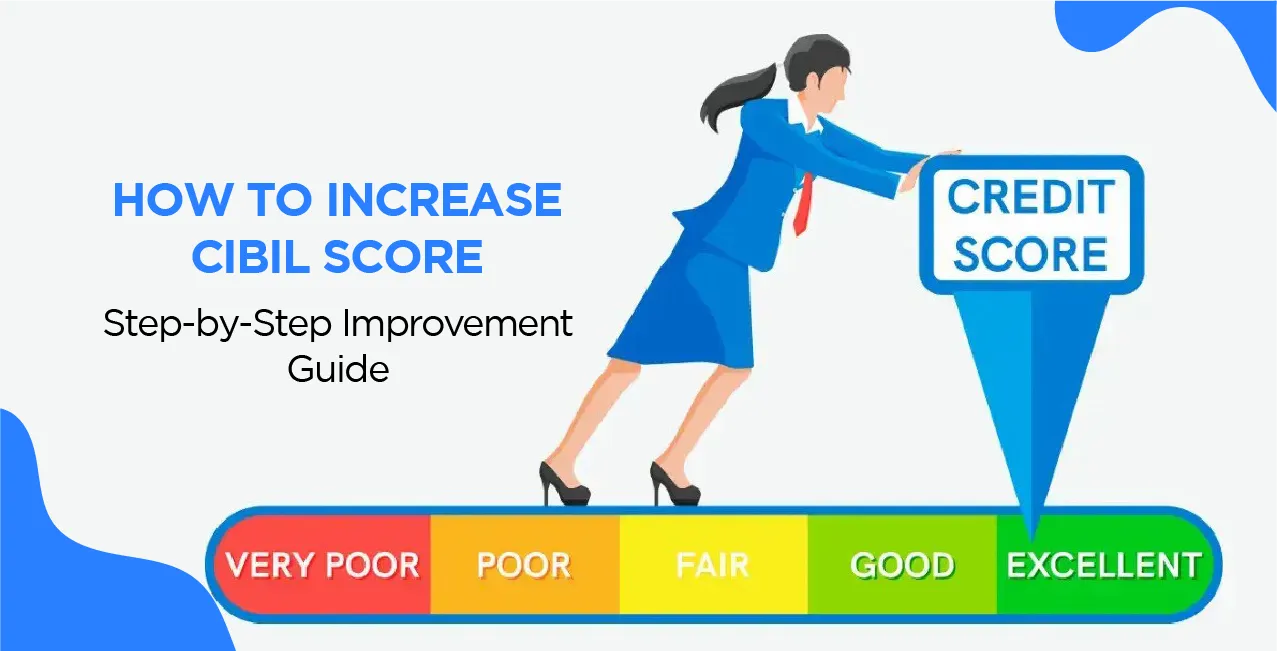
CIBIL Score Full Guide (2025) – Complete Beginner to Advanced Guide to Credit Score, Ranges, Calculation, Report, Improvement & Myths
Your CIBIL Score is one of the most important numbers in your financial life. Whether you’re applying for a loan, credit card, home loan, car loan, or even renting a house—your creditworthiness is judged by your CIBIL score.
In 2025, banks, NBFCs, fintech lenders, and even employers rely heavily on your credit score to analyze your financial discipline. A high CIBIL score can save you lakhs in interest, while a low score can lead to rejection, high EMIs, and limited financial opportunities
What Is CIBIL?
CIBIL = Credit Information Bureau (India) Limited.
It is India’s most trusted credit bureau that generates your credit score and credit report based on your financial history.
CIBIL collects data from:
-
Banks
-
NBFCs
-
Credit card companies
-
Fintech lenders
This data includes loans, EMIs, credit cards, and repayment patterns.
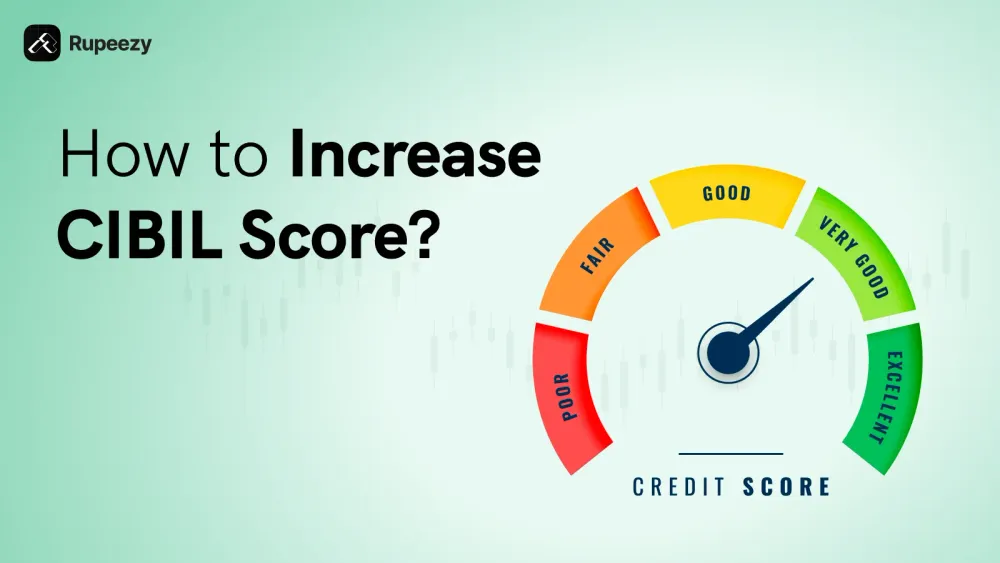
What Is a CIBIL Score?
A CIBIL Score is a 3-digit score that ranges from 300 to 900.
Higher score = Higher trust
Lower score = Higher risk
| Score Range | Meaning | Approval Chance |
|---|---|---|
| 750–900 | Excellent | Very High |
| 700–749 | Good | High |
| 650–699 | Fair | Medium |
| 550–649 | Poor | Low |
| 300–549 | Very Poor | Very Low |
Why CIBIL Score Matters in 2025?
Because your CIBIL score directly impacts:
✔ Loan approval
Banks prefer applicants with 750+ score.
✔ Interest rate
Higher score = Lowest interest
Lower score = Highest interest
✔ Credit card approval
Premium credit cards need strong CIBIL.
✔ Negotiation power
You can negotiate better terms with banks.
✔ Employment in sensitive sectors
Some MNCs and financial companies check credit behavior.
A strong score gives you financial freedom.
How Is CIBIL Score Calculated? (Exact Formula)
CIBIL considers 5 major factors:
1. Payment History – 35%
Most important factor.
Late payments / missed EMIs = biggest score drop.
2. Credit Utilization – 30%
Ideal usage: below 30%
Low usage = disciplined
High usage = risky behavior
3. Length of Credit History – 15%
Older accounts increase score.
4. Credit Mix – 10%
Healthy credit mix =
Secured loans + Unsecured loans
5. Hard Inquiries – 10%
Every loan/credit card application reduces score slightly.
CIBIL Report (Full Structure)
Your CIBIL report contains:
-
Score (300–900)
-
Personal info
-
Contact details
-
Employment info
-
Account information
-
Credit card history
-
Loan repayment history
-
Inquiries made by banks
-
Past defaults
-
Disputes or corrections
The report gives the complete picture of your financial behavior.
How Lenders Use Your CIBIL Report?
Banks check:
-
Current loans
-
EMI behavior
-
Loan closures
-
Defaults
-
Write-offs
-
Settlements
-
High utilization
-
Multiple loan applications
-
Credit card behavior
Based on this, they decide:
-
Whether to approve you
-
What interest rate to offer
-
What loan amount is safe
Reasons Why CIBIL Score Drops (Most Common Causes)
-
Late credit card payments
-
Missed EMIs
-
Loan settlement
-
Overusing credit limit
-
Too many loan applications
-
Closing old cards
-
Multiple unsecured loans
-
Co-applicant default
-
Hard inquiries
-
High credit card debt
-
BNPL misuse (Buy Now Pay Later)
-
Incorrect credit report data
If your score dropped unexpectedly, it’s usually due to one of the above.
How to Improve CIBIL Score Fast (Step-by-Step Guide)
Below are proven and guaranteed ways to improve your score quickly.
Step 1: Pay All EMIs & Credit Card Bills On Time
Payment history has 35% weightage.
Never delay even by 1 day.
Use:
✔ Auto-debit
✔ Reminders
✔ Scheduled payments
Step 2: Keep Credit Utilization Below 30%
If your limit is ₹100,000 → don’t use more than ₹30,000.
Low usage = higher trust.
Step 3: Increase Your Credit Limit
Higher limit automatically reduces utilization.
Ask bank → limit enhanced → score improves.
Step 4: Do NOT Close Old Credit Cards
Old accounts boost credit age.
Keep them active.
Step 5: Maintain a Healthy Credit Mix
Too many personal loans = bad
Mix of secured + unsecured = good
Step 6: Avoid Multiple Loan Applications
Apply only when needed.
Hard inquiries reduce score.
Step 7: Regularly Check Your CIBIL Report for Errors
40% Indians have errors in reports.
Fix them → score jumps.
Step 8: Avoid Loan Settlements
Settled loans show negative remark for 7 years.
Always close loans “Fully Paid”.
Step 9: Convert Credit Card Bills to EMI
If you cannot pay full bill, convert to EMI.
But never pay minimum amount.
Step 10: Use Secured Credit Cards for Credit Building
If your score is low, get a credit card against FD.
Use → repay → score increases in 90 days.
How Long It Takes to Improve CIBIL Score
| Score Range | Expected Time |
|---|---|
| 300–500 | 6–12 months |
| 500–650 | 3–6 months |
| 650–750 | 1–3 months |
| 750–900 | Maintain |
CIBIL Score Improvement Myths (Must Know)
❌ Checking score reduces score
Truth: Soft inquiry, no impact.
❌ Closing cards increases score
Truth: It reduces credit age.
❌ More credit cards reduce score
Truth: Misuse reduces score, not the card itself.
❌ Paying minimum card amount is safe
Truth: This destroys score.
❌ Zero credit usage increases score
Truth: No usage = no credit history.
CIBIL Score vs Loan Approval Chart
| Score | Loan Approval | Interest Rate |
|---|---|---|
| 750+ | Very Easy | Lowest |
| 700–749 | High | Moderate |
| 650–699 | Medium | High |
| 550–649 | Low | Very High |
| 300–549 | Very Low | Usually Rejected |
CIBIL Score for Different Loan Types (2025)
| Loan Type | Minimum CIBIL Required |
|---|---|
| Personal Loan | 750+ |
| Credit Card | 700+ |
| Home Loan | 650+ |
| Car Loan | 650+ |
| Business Loan | 700+ |
| Education Loan (Unsecured) | 700+ |
CIBIL Report Errors (Common Issues)
-
Loan showing as active even after closure
-
Wrong EMI history
-
Fraud accounts
-
Old loans not removed
-
Incorrect personal details
-
Duplicate loan entries
-
CIBIL mismatch with Aadhaar/PAN
You can file a dispute directly on the CIBIL site.
Frequently Asked Questions
1. What is a good CIBIL score?
750+ is excellent for easy approvals.
2. How to check CIBIL score for free?
CIBIL, Experian, CRIF, Equifax, Paytm, BankBazaar, PaisaBazaar.
3. Does checking my score reduce it?
No, only bank inquiries reduce score.
4. What if my score is below 600?
Use secured credit cards and pay everything on time for 6 months.
5. How fast can I improve my score?
Within 30–90 days if changes are implemented correctly.
6. Does salary affect CIBIL score?
No, but affects loan eligibility.
7. Does EMI bounce affect score permanently?
Yes, for up to 24 months.
8. Does paying minimum credit card due affect score?
Yes, negatively.
9. Can CIBIL be manipulated?
No—CIBIL updates only from banks/NBFCs.
10. Does closing a loan improve CIBIL?
Yes, but the positive effect comes after full closure.
11. How many credit cards are ideal?
2–3 cards with low usage.
12. Can job loss affect my score?
No, unless you start missing payments.
13. Can I increase CIBIL without a credit card?
Yes, by taking a small loan and repaying responsibly.
14. Does BNPL affect CIBIL?
Yes, BNPL is treated like a loan.
15. Which is better: CIBIL 1.0 or 2.0?
Banks mostly rely on CIBIL 2.0 — more accurate.
Conclusion
Your CIBIL score is a financial passport that opens doors to better loans, lower interest rates, premium credit cards, and stronger financial opportunities. A high score reflects trust, financial discipline, and responsible behavior. By understanding how CIBIL works and following proven improvement strategies—such as timely payments, low credit utilization, maintaining old accounts, and avoiding unnecessary loan applications—you can build and maintain a strong credit score.
Even if your current score is low, consistent good habits over a few months can improve it significantly. In 2025, financial institutions are stricter, making a strong credit score more important than ever. Start today by monitoring your credit report, correcting errors, and adopting disciplined repayment habits. A strong CIBIL score gives you long-term financial strength and peace of mind.
Disclaimer
This article is meant for educational purposes only. CIBIL score, reports, and corrections depend on individual financial behavior, bank reporting, and credit bureau policies. Readers should verify information with official sources and consult a financial advisor for personalized advice. The author and website are not responsible for any financial decisions or outcomes based on this guide.
